
Replacing Manual Coding
QInsights enabled humanities researchers to accelerate the research pipeline, replacing weeks of manual transcription and coding with instant, multi-modal analysis.
The Challenge
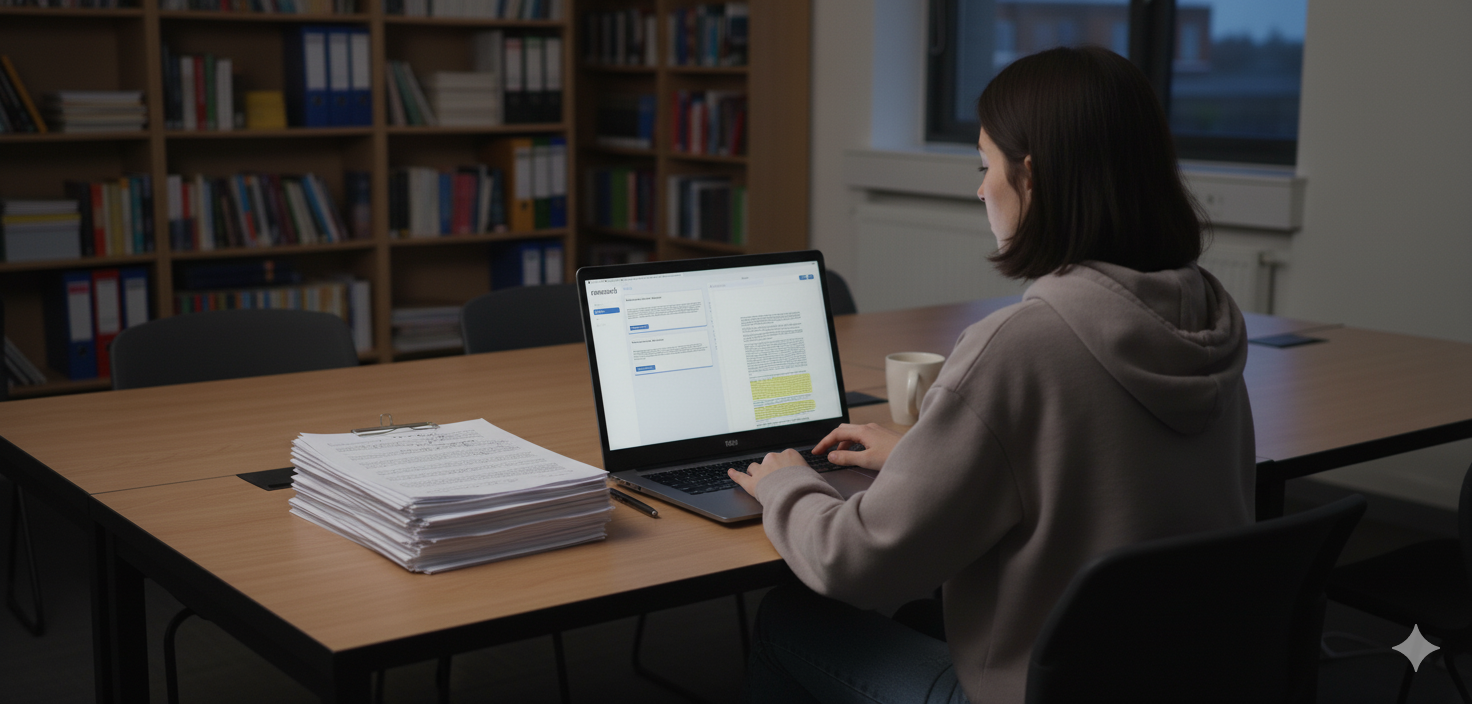
Prof. dr. Anja Ballis is the chair of German Language Education at the University of Munich and conducts research in Language Education and Comparative Education. Her research group often faces the “volume crisis”, drowning in vast amounts of non-linear text and audio data.
The traditional “Grounded Theory” approach required analysts to read and code the manuscripts iteratively. Such an exhausting process can make researchers feel that they lost control of the data due to sheer quantity.
Furthermore, valuable insights from past projects lay hidden, as re-analyzing old data for new insights was too labor intensive.
"I realized that some of my PhD students lose control. It's too much text, and manual coding becomes exhausting."
The Solution
Prof. Ballis deployed QInsights to act as an intelligent research partner, shifting the paradigm from manual labor to "question-generating didactics." Unlike other tools that require tedious pre-processing,
QInsights ingested raw audio files directly, eliminating the need for transcription while allowing the team to instantly re-analyze historical data through new lenses, and for new technological trends.
"In former times you had to transcribe interviews manually. QInsights works directly with the audio, which is amazing for the students. It allows us to re-analyse data we already collected to open up new discussions instantly."
— Prof. Ballies
The Impact
QInsights significantly improved research efficiency through a new paradigm of analysis, allowing the researchers to uncover new scientific value in "dormant" data without seeking new funding, faster.
Beyond speed, it has transformed an overwhelming process into a motivating one for new scholars.
"We are living in fast times and we have to write papers pretty fast. QInsights helps me catch up with the data. For people starting with qualitative analysis, it is motivating because you get a first view of the information, which helps you to deepen and continue.
— Prof. Ballies